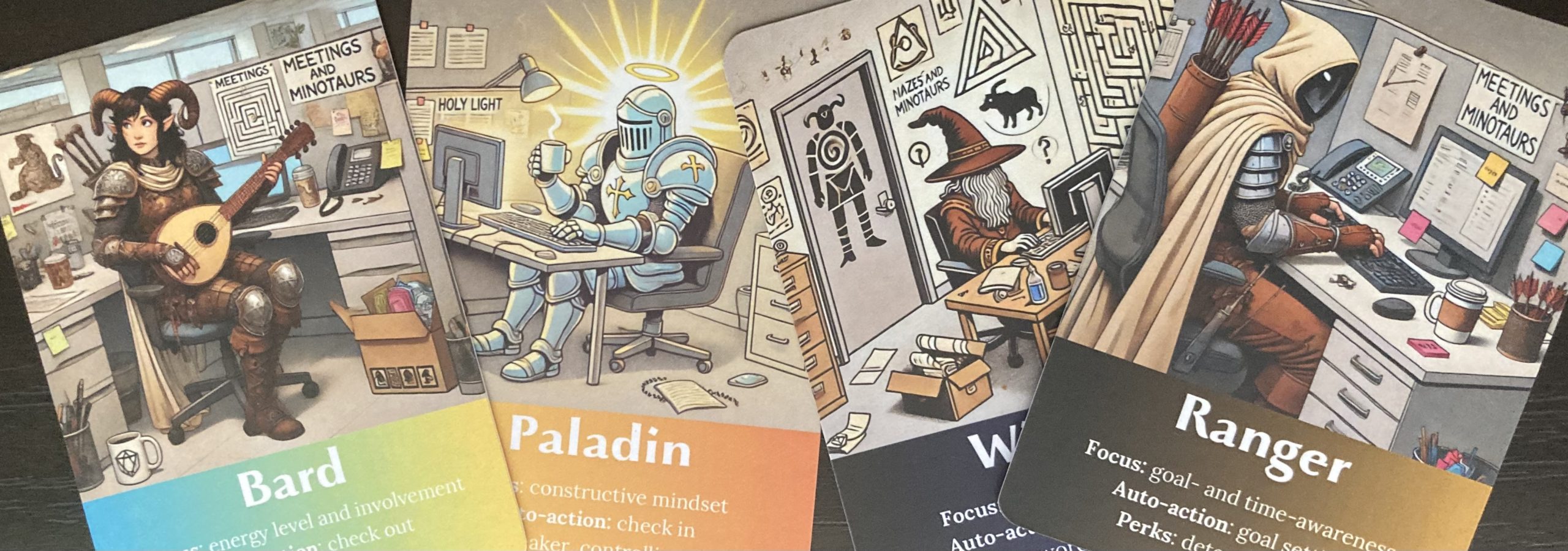
Introduction: Why this?
We’ve all been to countless meetings, and let’s face it: they often leave much to be desired. To improve them, you typically have two options:
- Hire a professional facilitator
- Educate the team in meeting culture so everyone can step in as facilitator
However, both options have their drawbacks. Hiring a professional facilitator can be resource-intensive, and if a team member takes on the facilitation role, it can hinder their ability to actively participate and contribute. Should you decide to train your staff or hire us as facilitators, we are up to it!
Meeting and Minotaurs offers a playful third way out of this facilitation paradox. Instead of having one person bear the burden of facilitation, the game delegates various responsibilities to specific roles among the participants, transforming the facilitation process into a collaborative experience.
Disclaimer: I do not state that meetings will become your new favorite thing from now on, but I can tell you that they can be way more fun and effective than they usually are.will become your new favorite thing from now on, but I can tell you that they can be way more fun and effective than they usually are.
The Game of Meetings
Think of meetings as a collaborative game: a group of people working towards a common goal, leveraging their complementary skills and responsibilities to tackle challenges. It’s like a budget version of D&D.
What are meetings?
Meetings are collaborative experiences requiring everyone’s interpersonal interaction to achieve a specific, shared goal relevant to the team.
Okay, this means a few things:
- If no interaction is needed from the participants, it’s not a meeting, it’s probably overlording, don’t do it. Send a pigeon, crow, e-mail or whatever is your thing.
- Meetings have specific goals, kinda like a quest. Without a relevant goal is either a non-consensual tavern experience or a dysfunctional conjuring circle.
- Meetings have a defined space (online or offline), set time, and a clear set of rules. These frames may vary from meeting to meeting, but they should always be explicit for everyone involved. Otherwise, you might find yourself in the Time Trap of the Mad Mage.
- And last, but certainly not least: meetings should have an atmosphere of psychological safety. Participants should feel involved and safe, being able to voice their opinion and feel seen like everyone else. Otherwise you might be participating in an Orcish kerfuffle!
Meetings and Minotaurs – leaving the maze in time without the bullshit
Having defined what meetings are and the potential abominations they can become, by identifying and eliminating these pitfalls, you’ll take a significant step toward fostering an effective and enjoyable meeting culture.
Our journey is just beginning: let’s transform the meeting process into a playful, collaborative experience. Welcome to Meetings n Minotaurs.
Steps into the Maze Meeting
Let’s explore how an effective meeting looks based on best practices:
Prep phase:
- Assign Meetings n Minotaurs role-cards
- Check-in round – to get the team ready
- Creating and prioritizing the Agenda (quest log) – identify the truly important items.
Questing (to complete an agenda item)
- Goal setting – Establish specific requirements to consider that item done.
- Time setting – Determine the time frame for completing that item
- Memo – After completion, record your progress somehow.
Endgame (15 minutes before the meeting officially ends)
- Checkout and feedback
- Finish Memo (make others know about your great deeds)
If this feels familiar, you’re on the right track. We’ll dive deeper into the details of each step as we explore the roles more thoroughly. Meetings n Minotaurs (M ‘n M) won’t overcomplicate your meetings; it simply adds one extra step (and layer) to enhance them: assigning role-cards at the start to determine responsibilities and perks for the session. This will define how each person contributes to your collective quest.
Shitty meeting type: Overlording
One person in authority organizes a meeting and completely dominates the conversation, leaving other participants feeling like expendable minions in a hostage-like situation.
Shitty meeting type: The non-consensual tavern experience
When people use the meeting as space for stories and chit-chat instead of goal oriented collaboration. I mean nothing wrong with that but that’s certainly not a meeting, so people are kinda trapped in a tavern of chinwag.
Shitty meeting type: The dysfunctional conjuring circle
When people delve into a doom-spiral of venting, going deeper and deeper into problems and difficulties, gathering purposeless negative energy in an involuntary act of conjuring some unnamable horror. Well, this kinda behavior can certainly signal problems in the organizational culture or a lack of space for dealing with difficult emotions in the workspace. But it’s not a meeting, and it rarely has any positive effect without the proper framework.
Shitty meeting type: Time trap of the mad Mage
This “meeting”-type exists since the beginning of time… or probably just out of it. Without proper time-awareness the minutes stretch and turn into hours leaving people wondering about what the heck is happening to them… Will they stay here forever or does the insanity end eventually? Well, we will see, just wait…
Shitty meeting type: the Orcish kerfuffle
If participants raise their voices, talk over each other instead of asking questions, invalidate feelings, blame, burp or make questionable jokes (or do any of these things) you have an orcish kerfuffle on your hands. This might signal a problem in organizational culture, or just a really subpar and potentially harmful meeting experience for the participants.
Our Heroes
A mighty Paladin to manage the Quest Log (agenda) and guide the group toward the Light… or the neon lights.
A sharp Ranger to keep the team focused on goals and ensure tasks are completed on time while avoiding traps.
A wise Wizard to make the invisible visible, preserving knowledge and wisdom—or at least saying something profound.A charismatic Bard to keep morale high and the team energized… or keep them grounded with a well-timed pun.
While some roles may naturally suit certain people due to their personality traits or skills, we strongly encourage rotating the roles to promote learning. Speedrunning through quests is fun, but don’t forget—you need to grind for that XP!
The Cards
Every role-card has three properties.
Focus – the aspect of the meeting the role pays extra attention to. It’s their responsibility to make the team aware of this element.
Auto-action – These are essential actions for an effective meeting. Each role ensures one key step is neither skipped nor poorly executed.
Perks – With great power comes great responsibility. And with moderately big responsibilities come… perks. Each role has unique privileges they enjoy during the meeting.
The Paladin – Keeper of Both Metaphorical and Literal Light
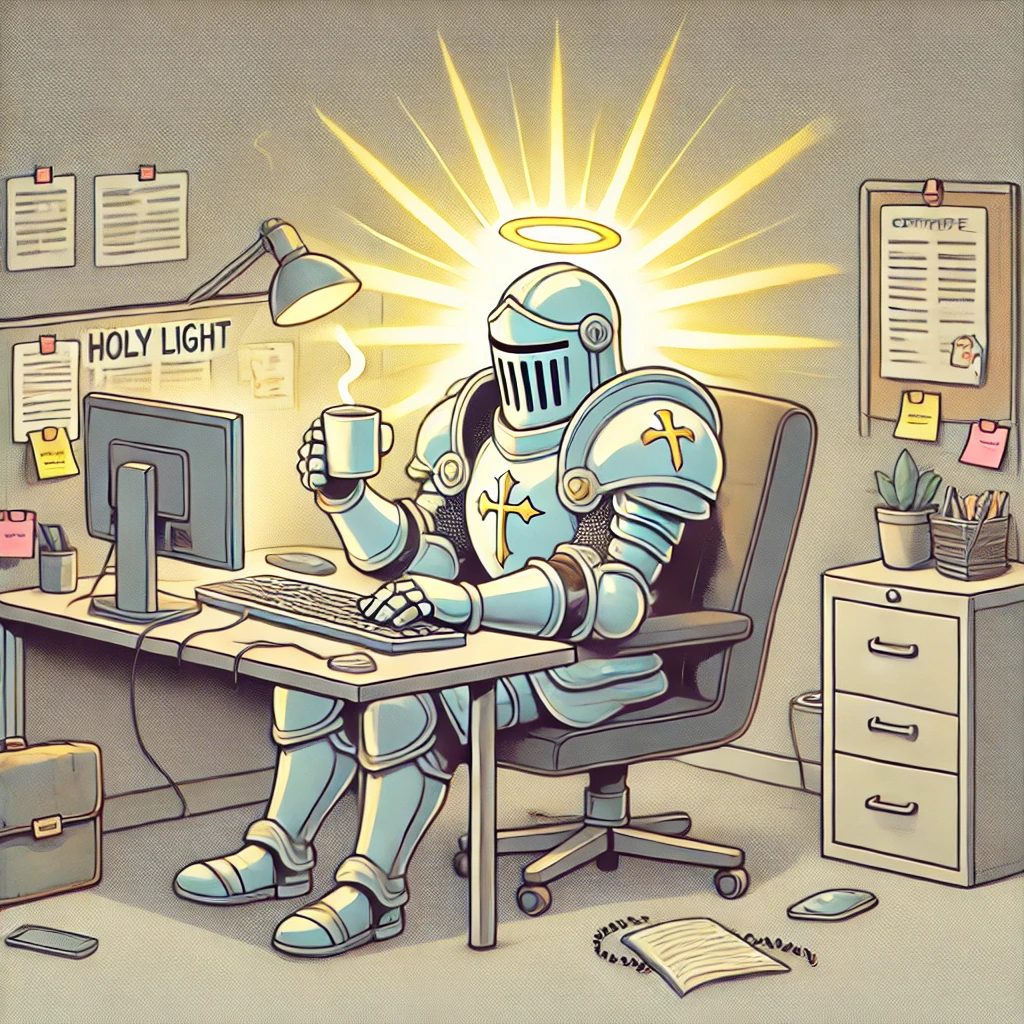
The Paladin is a sacred and devoted knight with a mission and a strong sense of justice. During a quest, the Paladin ensures the team remains present, treats one another respectfully, and stays resilient in the face of challenges.
As indicated on the card, the Paladin’s focus is fostering a constructive mindset, built on four key pillars:
- Respect: Team members listen to each other and value each other’s opinions.
- Empowerment: Encouragement outweighs criticism, and team members build on one another’s ideas.
- Solution-focus: The team prioritizes developing solutions over merely airing problems.
- Teamwork: Instead of blaming individuals, the team finds common solutions.
How Does the Paladin Uphold These Principles?
Primarily by embodying them. This means reinforcing positive, constructive behavior rather than only addressing issues. A lighthearted word of encouragement is a great first step: “I give my blessings to this!” “Well said!” “May the light shine on you!” If these phrases aren’t your style, use your own. Encouragement doesn’t need to be funny; start with whatever feels natural to you. The key is to remain constructive. You are the Paladin—lead by example.
Remember, the Paladin isn’t solely responsible for the team’s mindset; it’s a cooperative game. Their job is to raise awareness of group behavior. It’s perfectly fine to say, “As the Paladin, I need to point out that we keep interrupting each other. Can we listen more attentively, please?” It’s even more crucial to highlight when the team collaborates well, communicates mindfully, or remains solution-focused. This type of feedback may feel odd at first, but it can make a big difference over time.
Auto-action: Check-in
The Paladin oversees one of the first steps in a meeting: the check-in. This ritual helps participants sync up, engage, and shift into „quest mode.” Here’s what a solid check-in looks like:
Each participant shares something that helps them be fully present at the meeting, keeping it brief. This practice helps individuals transition into meeting mode and offers context about their current emotional state. For instance, “I’m waiting for an important client call, so I’m a bit anxious but curious,” or “I have a sore tooth, so if I flinch, it’s probably not you,” are good examples.
The check-in isn’t meant for discussion. Each participant should have a chance to share without inviting responses. Acknowledge what they say and make them feel heard, but avoid responding in a way that adds content or shifts focus. Doing so could limit others’ willingness to share and disrupt the framework.
An effective check-in often goes round-robin style, though letting people check in at their own pace can work, too.
Facilitation prompt: “How are you feeling right now?”
The Ultimate Judge and Keeper of Lights
As you can see, the Paladin role is an excellent opportunity to deepen your understanding of group dynamics, constructive communication, and solution-focused thinking. But there are also perks to being this noble figure:
- Tiebreaker: When the team is at an impasse, the Paladin steps in to make the final decision, guided by their strong sense of justice and the greater good.
- Controlling the Lights: As the keeper of both metaphorical and literal light, the Paladin has the privilege of adjusting the meeting’s lighting. With a wave of their hand (or a flick of the switch), they can cast “Illuminate All” or “Dim the Lights” to set the tone for deep reflection or energizing action.
Keeper of the sacred order, facilitator of check-ins, breaker of ties, and wielder of the Light—stay vigilant, noble Paladin, for the meeting’s fate might rest in your hands!
If you feel that your feedback-culture needs improvement or your team is constantly stuck with problems, we might have a solution for you. Let’s have a chat!
Ranger – Navigator of the Meeting Maze
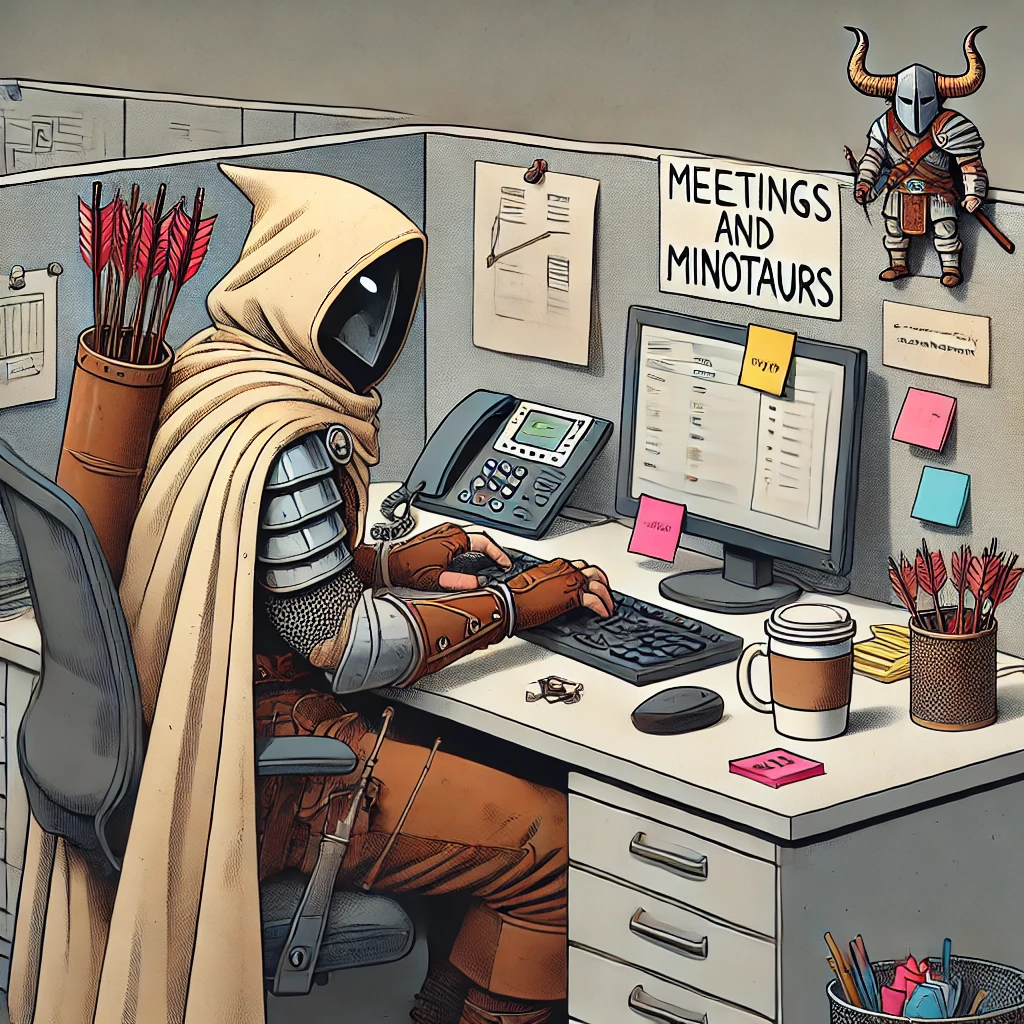
With the instincts of a maze-walker and the precision of a well-aimed arrow, the Ranger guides the party through each meeting, always focused on the Bull’s Eye—the ultimate goal. Beware of hidden traps! Within the meeting maze, detours and irrelevant topics can easily lead the group astray. The Ranger stays vigilant, calling out, “Hold! There’s a trap ahead!” whenever discussions drift too far from the objective. Their role is to keep the group focused, avoiding dead ends and time-consuming paths that don’t contribute to success.
Auto-action: Goal Setting
Once the agenda is set, the team begins work on the highest-priority item. This is where the Ranger steps in. To ensure the team remains sharp and effective, they must help define clear criteria for what it means for an objective to be completed. This means creating a brief definition of “done” that is so specific even an outsider could determine if it’s been achieved.
Goal setting involves the team envisioning the future state where the agenda item is complete and describing it in detail. For example, “Solving problem X” is too vague to be actionable. Instead, after goal setting, it might look like: “We have reached an agreement on Y. Based on that, we created a month-long action plan and sent it to all involved parties.”
Helpful questions for goal setting:
Proper goal setting results in a concrete definition of completion, free of generic terms open to interpretation. It’s the Ranger’s duty to ensure this step isn’t overlooked and that the whole team shares a clear, specific target.
- What exactly are we aiming for?
- What should we have by the end?
- How will we know when we’ve completed this item/task?
With a specific goal in place, the group saves significant time, but the clock keeps ticking. The Ranger’s job includes keeping the team aware of time, so every goal should come with a set time-box. When time is running out or discussions become too time-consuming, the Ranger might need to step in with a gentle reminder: “We have only 15 minutes left to reach our goal. This discussion is interesting, but does it help us get closer to our goal?”
Yes, being the Ranger sometimes means nudging the team, but remember: your role is to keep the group aware of goals and time, acting like a lookout. The responsibility for action, however, is shared. After all, this is a cooperative game.
Detecting Traps
The Ranger’s job is to keep things sharp, but they also need to call out potential traps when the conversation veers into unproductive territory. This responsibility comes with caution—you don’t want to shut people down. However, certain situations or past experiences might signal when a discussion risks leading the team off-track. When the Ranger detects a trap, they can alert the team. Trusting the Ranger’s perception can save valuable time and energy, even if not everyone agrees with the call. Any differing perspectives can be shared during the feedback session at the end of the meeting.
“Stay sharp, vigilant Ranger, for every minute counts and every stray topic is a potential trap. With your keen eyes and steady aim, lead your party straight to victory, proving that meetings can be conquered one precise shot at a time!”
Wizard – Weaver of Magic
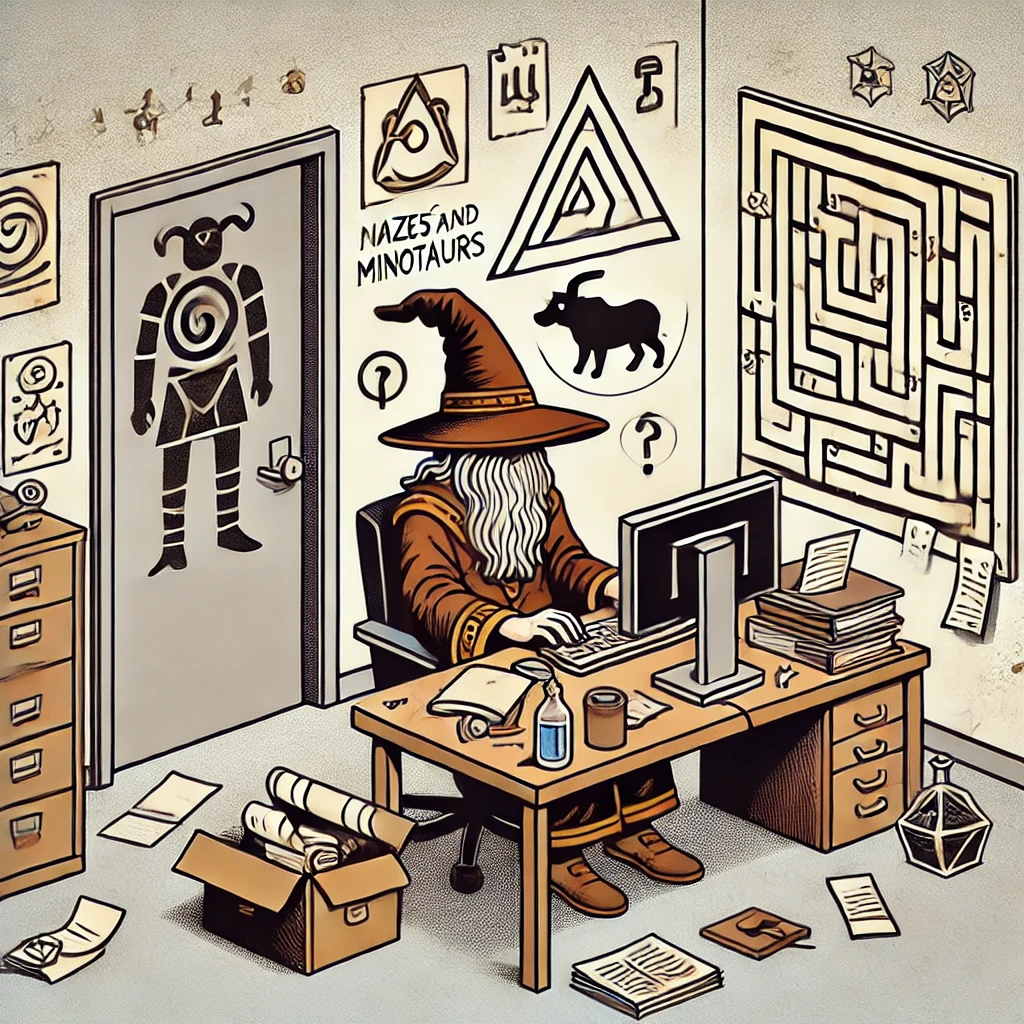
The Wizard transforms chaos into clarity by casting powerful spells known as Frameworks to shape human behavior. Unlike lightning bolts or fireballs, a Wizard’s magic lies in finding the perfect methods to guide the group’s collaboration. Whether it’s outlining brainstorming rules or structuring a decision-making process, the Wizard conjures the right framework for each challenge, revealing the hidden structures that influence the meeting.
Choosing a Framework
Frameworks are sets of rules and principles that shape how people interact during specific parts of a session. For instance, the check-in round has rules like “one person speaks at a time,” “no reactions allowed,” and “keep it brief and relevant.” These guidelines create a structured environment where participants can share their current state of mind, facilitating effective and safe engagement. Even a small change in these rules alters the framework, reshaping the atmosphere of the session.
Consider the well-known method of brainstorming. Although some may think of it as a technique, the Wizard sees it as a framework: a space defined by rules that promote creativity. Brainstorming can quickly derail if these rules are ignored. Here’s a breakdown of the elements that make up a productive brainstorming frame:
- Positive atmosphere: Creativity thrives in a fun and lighthearted environment. Stress and pressure stifle lateral thinking, so use each other’s ideas for inspiration and build on them. Encouragement is essential!
- Quantity over quality: Generating more ideas increases the likelihood of finding valuable ones. Focusing on quantity also prevents the violation of the next rule.
- No criticism allowed: Criticism disrupts the flow and makes participants self-conscious, hindering creativity. The principle “there is no such thing as a bad idea” is essential here.
- Turning quantity into quality: Many brainstorming sessions fail because they skip this phase. After generating ideas, the team must sift through them and build solutions. Collaboratively combining ideas helps identify the most effective strategies to meet the goal.
As you can see, each rule supports the others, weaving a cohesive framework. This structured approach may seem like magic—appropriate for a Wizard—but it’s truly remarkable how these simple rule sets can transform the atmosphere and interactions of a session.
As the Wizard, you are responsible for ensuring that the team follows the appropriate framework for each agenda item and remains aware of its guiding principles. This may feel like a daunting task at first, but you can start by asking questions after the goal-setting phase, such as:
- “How should we collaborate to achieve this?”
- “Any suggestions on how we should approach this?”
- “Can we clarify what we’re doing right now?”
- “Do we need to adjust anything to be more efficient?”
The team’s main objective is to find the framework that helps them achieve the goals set during the Ranger’s goal-setting phase. To aid in this endeavor, here is a basic spellbook of techniques (each with a timebox):
- Group discussion: The group discusses a topic together
- Braindump: Participants unload everything that’s on their mind regarding a situation or topic.
- Round robin: Have each participant share their thoughts in a set order without interruption. This ensures that everyone’s voice is heard and prevents dominant participants from taking over the discussion.
- Silent Generation: Allow team members a few minutes to brainstorm or write down ideas silently before sharing them. This helps more reserved participants contribute their thoughts without immediate pressure.
- Dot Voting: After generating ideas, participants receive a set number of dots or markers to vote on their preferred options. This technique helps prioritize ideas quickly and visually.
- Affinity Mapping: Group similar ideas or themes together on a board. This helps the team identify common threads and consolidate their thinking before moving to the next phase.
- Think-Pair-Share: Start by having individuals think about a question or problem on their own, then discuss it with a partner before sharing insights with the group. This encourages diverse perspectives and deeper reflection.
- 1-2-all: A sequence of silent reflection followed by pair and group discussions.
- Fishbowl Discussion: Select a few participants to have an in-depth conversation while others observe. After a set time, swap roles to involve everyone. This technique works well for exploring complex topics or problem-solving.
- Reverse Brainstorming: Instead of asking how to solve a problem, ask, “How could we cause this problem?” Then, flip those negative ideas into solutions. This helps the team view challenges from a different angle.
Auto-action: Writing the Memo
As a master of scrolls and a frequent visitor of libraries, the Wizard knows that the team’s work serves not just the present but future endeavors as well. It’s their responsibility to ensure that every decision, insight, and action plan is recorded in a meeting memo. This doesn’t mean the Wizard has to write the memo themselves, but they must ensure someone does. A wise and considerate Wizard might even reward the note-taker with a warm cup of coffee, tea, or a mana potion.
Words of Wisdom
Since wisdom is their forte, the Wizard may offer the team a final gift after the check-out round: Words of Wisdom. This profound summary captures the essence of the meeting’s learnings and distills them into a final, magical insight. And yes, this too should be included in the memo!
With scrolls in hand and frameworks at the ready, the Wizard’s wisdom transforms mundane meetings into realms of discovery and clarity. So go forth, noble Wizard, and remember: when in doubt, it’s not chaos—it’s just magic you haven’t organized yet!”
If you feel like leveling up your wizard-game and learning more about how to design frameworks for meetings, workshops or processes, we got you. Let’s have a chat!
Bard – The Harmonizer
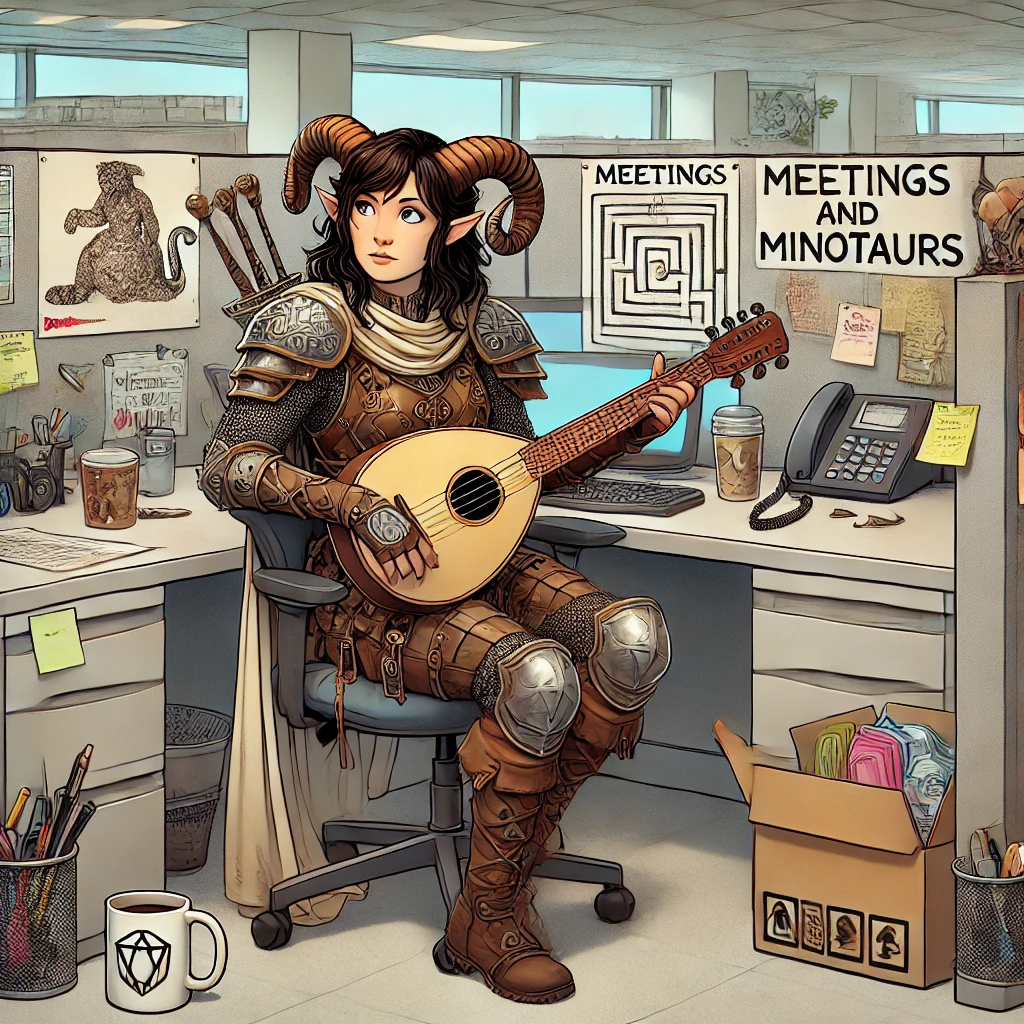
With a lute in hand and a twinkle in their eye, the Bard strums the strings of motivation, tuning the team’s energy to match the task at hand. Like a maestro of a magical orchestra, they sense the ebb and flow of enthusiasm in the room, ensuring that the vibe is just right for productive collaboration.
Energy Level and Involvement
But the Bard’s magic doesn’t stop there! They are ever-watchful, ensuring that every voice is heard and that no participant lingers in the shadows. With the skill of a seasoned performer, the Bard draws out those quiet souls, making sure everyone is engaged in the harmonious conversation. If a participant seems lost in thought, the Bard is quick to bring them back into the spotlight, reminding the team that every contribution is a vital note in their symphony. To summarize:
- Make sure that the team’s energy level matches the task (you can even suggest energizer activities if your team is open to that).
- Help quieter participants get heard.
- Help louder participants stay quiet.
- Keep the whole team involved.
- Make the team stand up from time to time, maybe even move a little bit (yeah, we sit too much—it’s not healthy and not great for energy levels either…).
- Visualize what’s happening (grab that chalk, marker, or colorful post-it and unleash your inner artist).
As mentioned by other roles, it’s not the Bard’s responsibility to do all of the above, but they should keep the team aware. So, if you’re not the type to make your team stand up and move around, you can simply point out that everyone has been sitting for an hour and is looking drained. Playing a role like this can help you step outside your usual boundaries and grow, so don’t shy away from trying new things!
Repertioire
Thumbs-Up/Thumbs-Down: Ask the group to rate their energy or understanding of the meeting so far by showing thumbs up (good energy, feeling engaged), thumbs sideways (neutral), or thumbs down (low energy, confused).
Stop and Reflect: After a major discussion or decision, pause and ask everyone to take a moment of silent reflection. This can be as short as 30 seconds, it can be followed by a round where everyone shares their key takeaway or any lingering thoughts.
Power of Music: Play some instrumental music before or after breaks to set the tone or after key moments to help maintain the energy flow. Alternatively, a quick sound cue (like a bell or a timer) can help shift focus when transitioning between tasks.
Auto-action: Check-out
As the meeting draws to a close, the Bard leads the team in a joyous Check-Out, a ritual where everyone can share their experiences and reflections. Here, the voices of the participants crescendo, weaving their insights into the fabric of the meeting’s memory (only to be topped by the Wizard’s Words of Wisdom).
Pay attention to the emotional tone of the meeting and adjust the check-out accordingly. If the team seems energized, the check-out can be upbeat and enthusiastic. If the meeting was intense, a quieter, more reflective check-out might be appropriate.
Optional themed check-out: Adding a fun or thematic element to the check-out can lighten the mood and engage participants in a creative way. For example, asking everyone to describe the meeting in a single word, or to share their takeaway as if it were a movie title.
And let us not forget the Bard’s charming perk! Armed with a repertoire of delightfully dull jokes and puns, they sprinkle moments of levity throughout the session—just enough to keep spirits high without straying into chaos. This also means that others should keep their own dull jokes to themselves during the meeting…
The master of energy, facilitator of check-outs, and bringer of laughter!